

Organic reach on platforms like Instagram and Facebook has declined by over 30%, making traditional posting obsolete. Businesses need strategic and authentic social media management in 2026 to cut through content saturation and algorithm changes. This guide outlines evidence-based steps to enhance engagement and brand visibility, helping you transform your social media efforts from ineffective broadcasts into meaningful conversations that drive measurable business results.
Table of Contents
- Introduction To Social Media Management In 2026
- Prerequisites: What You Need Before You Start
- Step 1: Defining Clear Objectives
- Step 2: Understanding Your Audience
- Step 3: Creating Engaging Content
- Step 4: Leveraging Ai Responsibly
- Step 5: Building And Nurturing Communities
- Common Mistakes And Pitfalls To Avoid
- Expected Outcomes And How To Measure Success
- Enhance Your Social Media Presence With Toby Jones
- Frequently Asked Questions
Key takeaways
| Point | Details |
|---|---|
| Clear objectives and audience understanding are foundational | Set measurable goals tied to business outcomes and deeply analyse your audience's preferences to guide strategy. |
| Consistent, authentic content and responsible AI use boost engagement | Prioritise short-form video, maintain posting consistency, and use AI tools ethically without sacrificing human authenticity. |
| Community building and social commerce drive loyalty | Engage audiences in private spaces like Discord and WhatsApp Channels to increase retention by 20-25%. |
| Avoid common pitfalls like over-automation | Balance automation with genuine human interaction and monitor analytics to adapt your strategy continuously. |
| Measure success with relevant KPIs and iterate | Track engagement rates, conversions, and community interactions to refine campaigns and maximise ROI. |
Introduction to social media management in 2026
The digital landscape has transformed dramatically, with organic reach declining over 30% across major platforms. This shift demands strategic social media management rather than simply posting content and hoping for results. Content saturation means your audience scrolls past hundreds of posts daily, making authentic, value-driven engagement essential for cutting through the noise.
AI tools offer powerful support for content creation and analytics, but they must be balanced with human authenticity to maintain trust. Algorithms now reward genuine interaction signals like hover time and rewatching rather than simple likes. This evolution requires businesses to rethink their approach entirely, focusing on meaningful connections rather than vanity metrics.
Goal-setting and measurement form the critical foundation of successful social media management. Without clear objectives tied to business outcomes, you'll struggle to evaluate performance or justify your investment. The social media trends for 2026 emphasise strategic planning over reactive posting.
Partnering with experts like Toby Jones can accelerate your learning curve by providing integrated marketing strategies. Their website design and development services ensure your social media efforts drive traffic to high-converting platforms. This holistic approach transforms social media from a standalone activity into part of a cohesive growth ecosystem.
Prerequisites: what you need before you start
Before launching your social media management strategy, align your social media goals with broader business objectives. Whether you're pursuing brand awareness, lead generation, or customer retention, clear alignment ensures every post serves a strategic purpose. This foundation prevents wasted effort on activities that don't move your business forward.
Access to AI-powered tools for content creation and analytics is now essential rather than optional. These tools help you scale your efforts efficiently whilst maintaining quality. However, technology alone won't deliver results without proper strategy and human oversight to ensure authenticity.
Assemble a team with diverse skills including content creation, copywriting, visual design, and data analysis. Even small businesses need these competencies, whether through in-house staff, freelancers, or agency partnerships. The right mix of creative and analytical talent enables you to produce engaging content and measure its impact effectively.
Understand the unique characteristics and audiences of key social platforms:
- Instagram prioritises visual storytelling and short-form video through Reels
- LinkedIn serves B2B audiences seeking thought leadership and professional insights
- TikTok dominates among younger demographics with entertainment-focused content
- Facebook offers robust community-building features and diverse audience demographics
Partnering with digital marketing services providers can fill skill gaps and provide strategic guidance. This support proves especially valuable when building your initial strategy or scaling operations.
Step 1: defining clear objectives
Setting clear social media goals improves campaign effectiveness by up to 30%. Start by differentiating between three primary goal categories: brand awareness focuses on reach and impressions, engagement emphasises interactions and community growth, whilst conversions target specific actions like purchases or sign-ups. Each requires distinct strategies and content approaches.
Establish key performance indicators linked to each objective. For brand awareness, track reach, impressions, and share of voice. Engagement goals require monitoring likes, comments, shares, and conversation rates. Conversion-focused objectives demand measurement of click-through rates, landing page visits, and completed transactions.
Prioritise goals based on your audience's needs and current business priorities. A new business might emphasise awareness initially, whilst an established brand could focus on deepening engagement with existing followers. Your social media management guide should reflect these priorities through content allocation and resource investment.
Consider these goal-setting best practices:
- Make objectives specific and measurable rather than vague aspirations
- Set realistic timelines for achieving targets based on current performance
- Align social media goals with quarterly business objectives for accountability
- Review and adjust goals monthly based on performance data and market changes
Your objectives provide direction for all subsequent decisions, from content creation to platform selection. Clear goals also facilitate team alignment and enable effective performance evaluation.
Step 2: understanding your audience
Utilise social listening tools to gather insights about your audience's interests, pain points, and conversations. These platforms reveal what your target market discusses online, helping you create relevant content that addresses their actual needs rather than assumptions. Social listening also identifies emerging trends before they become mainstream.

Segment your audience by demographics like age, location, and income alongside behavioural patterns such as purchase history and content preferences. This segmentation enables personalised messaging that resonates with specific groups. A 25-year-old entrepreneur requires different content than a 50-year-old executive, even if both are potential customers.
Adapt your content formats and posting timing to match audience platform usage habits. Research shows different demographics prefer different platforms and browse at varying times. Instagram users might engage most during evening hours, whilst LinkedIn sees peak activity during weekday mornings. Matching your schedule to audience behaviour maximises visibility.
Continuously update audience profiles based on engagement data and feedback. Your understanding should evolve as you gather more information about which content types perform best and which messages generate responses. This iterative approach prevents your strategy from becoming stale or misaligned with audience interests.
Step 3: creating engaging content
Short-form video content dominates, accounting for over 50% of user time on platforms like Instagram. Prioritise formats like Reels, TikTok videos, and YouTube Shorts that capture attention quickly. These formats align with decreasing attention spans whilst offering high engagement potential through entertaining or educational content.
Create content that balances authenticity with brand consistency. Audiences increasingly reject overly polished, corporate messaging in favour of genuine, relatable posts. Share behind-the-scenes glimpses, employee stories, and honest discussions about challenges alongside promotional content. This mix builds trust whilst maintaining professional standards.
Consistent posting improves engagement by about 25% compared to irregular schedules. Develop a content calendar that maintains regular presence without overwhelming your audience. Quality trumps quantity, so focus on delivering value consistently rather than posting frequently with mediocre content.
Leverage algorithm signals like hover time and rewatching rather than optimising solely for likes. Platforms now prioritise content that keeps users engaged longer. Create compelling hooks in the first three seconds and deliver value that encourages viewers to watch repeatedly or spend time reading captions.
Consider these content best practices:
- Use storytelling techniques to make information memorable and shareable
- Incorporate user-generated content to build community and provide social proof
- Test different formats regularly to identify what resonates with your specific audience
- Optimise captions with clear calls-to-action that guide desired behaviours
Pro Tip: Batch-create content during dedicated production sessions to maintain consistency without daily pressure. This approach improves quality by allowing focused creative work and ensures you always have content ready for scheduled posting.
Partner with digital marketing services to enhance content strategy or leverage cinema, TV and radio expertise for professional video production that elevates your social media content quality. Professional support ensures your content meets platform best practices whilst staying aligned with 2026 social media trends.
Step 4: leveraging AI responsibly
Use AI tools for caption writing, image generation, and scheduling to save significant time on routine tasks. These technologies excel at handling repetitive work, allowing your team to focus on strategy and creative direction. AI can generate multiple caption variations quickly, helping you test different messaging approaches efficiently.
Maintain human oversight to add personalised touches and ensure brand voice consistency. AI-generated content often lacks nuance and emotional intelligence that human editors provide. Review every AI-created piece before publishing, adjusting tone, adding personality, and ensuring accuracy.
Avoid overusing AI to prevent loss of authenticity that audiences quickly detect. Whilst AI offers efficiency, excessive reliance creates generic content indistinguishable from competitors. Use AI as a starting point or assistant rather than a replacement for human creativity and strategic thinking.
Consider ethical implications of AI content in your messaging. Transparency about AI use builds trust, whilst deceptive practices damage credibility. Some audiences appreciate knowing when AI assists with content creation, especially if you frame it as enabling more frequent, helpful posts.
Implement these AI best practices:
- Use AI for ideation and first drafts, then enhance with human creativity
- Establish clear brand voice guidelines that AI tools must follow
- Regularly audit AI-generated content quality to maintain standards
- Combine AI efficiency with human empathy for optimal engagement
Pro Tip: Create a hybrid workflow where AI handles time-consuming tasks like keyword research and initial drafts, whilst humans focus on strategic decisions, emotional resonance, and final quality control. This balance maximises efficiency without sacrificing authenticity.
Step 5: building and nurturing communities
Focus on private spaces like Discord and WhatsApp Channels where community engagement significantly boosts customer loyalty and retention by 20-25%. These platforms enable deeper conversations than public social media feeds allow. Members feel more comfortable sharing feedback, asking questions, and connecting with both your brand and fellow customers.
Encourage two-way communication through regular feedback loops that make community members feel heard. Ask for input on product development, content preferences, and service improvements. This involvement transforms passive followers into active participants invested in your success.
Reward loyal customers with exclusive content, early access to products, or special discounts to foster advocacy. Recognition motivates members to promote your brand organically through word-of-mouth recommendations. These advocates often provide more credible endorsements than traditional advertising.
Monitor and moderate communities to maintain quality and positive atmosphere. Clear guidelines prevent toxic behaviour whilst encouraging constructive discussions. Active moderation shows you value the community space and care about member experience.
| Community Platform | Best For | Engagement Type |
|---|---|---|
| Discord | Gaming, tech, creative communities | Real-time chat, voice channels |
| WhatsApp Channels | Direct updates, exclusive content | One-way broadcasts with reactions |
| Facebook Groups | Broad audiences, local communities | Discussions, events, polls |
| Slack Communities | Professional networks, B2B | Organised channels, integrations |
Building genuine communities requires patience and consistent effort, but the loyalty and retention benefits far exceed transactional social media relationships.
Common mistakes and pitfalls to avoid
Avoid reliance solely on automation tools without maintaining genuine human engagement. Whilst scheduling posts saves time, social media requires real-time interaction to build relationships. Respond personally to comments, participate in conversations, and show authentic interest in your audience rather than treating social media as a broadcast channel.
Never neglect community interaction and feedback from your followers. Over 50% of failing campaigns suffer from poor community engagement and neglecting analytics. Ignoring comments, messages, and mentions signals disinterest in your audience, damaging trust and loyalty. Allocate daily time for meaningful interactions.
Track relevant metrics and adjust your strategy regularly based on performance data. Many businesses set initial strategies but fail to iterate based on results. Monthly reviews of engagement rates, reach, and conversions reveal what's working and what needs adjustment. Data-driven optimisation dramatically improves outcomes over time.
Stay updated on platform changes affecting reach and engagement. Organic reach declined 30-40% on Facebook and Instagram in recent years, requiring strategy adjustments. Algorithm updates, new features, and shifting user behaviours demand ongoing education and adaptation.
Avoid these frequent errors:
- Posting promotional content exclusively without providing educational or entertaining value
- Ignoring negative feedback or deleting critical comments rather than addressing concerns
- Copying competitors' strategies without adapting to your unique brand and audience
- Failing to align social media efforts with broader marketing and business objectives
"The biggest mistake businesses make is treating social media as a megaphone rather than a telephone. Success requires listening and responding, not just broadcasting."
Recognise that social media management pitfalls often stem from short-term thinking. Building meaningful presence requires sustained effort and patience rather than expecting viral success overnight.
Expected outcomes and how to measure success
Track engagement rates, click-through rates, and conversions as primary success indicators. Engagement rate measures how actively your audience interacts with content relative to follower count. Click-through rates reveal how effectively your posts drive traffic to desired destinations. Conversion tracking connects social media efforts to actual business outcomes like sales or sign-ups.
Expect engagement improvements of 20-30% within three months after optimising your strategy based on data insights. This timeline assumes consistent implementation of best practices including regular posting, audience-focused content, and active community management. Results vary by industry, audience size, and starting baseline.
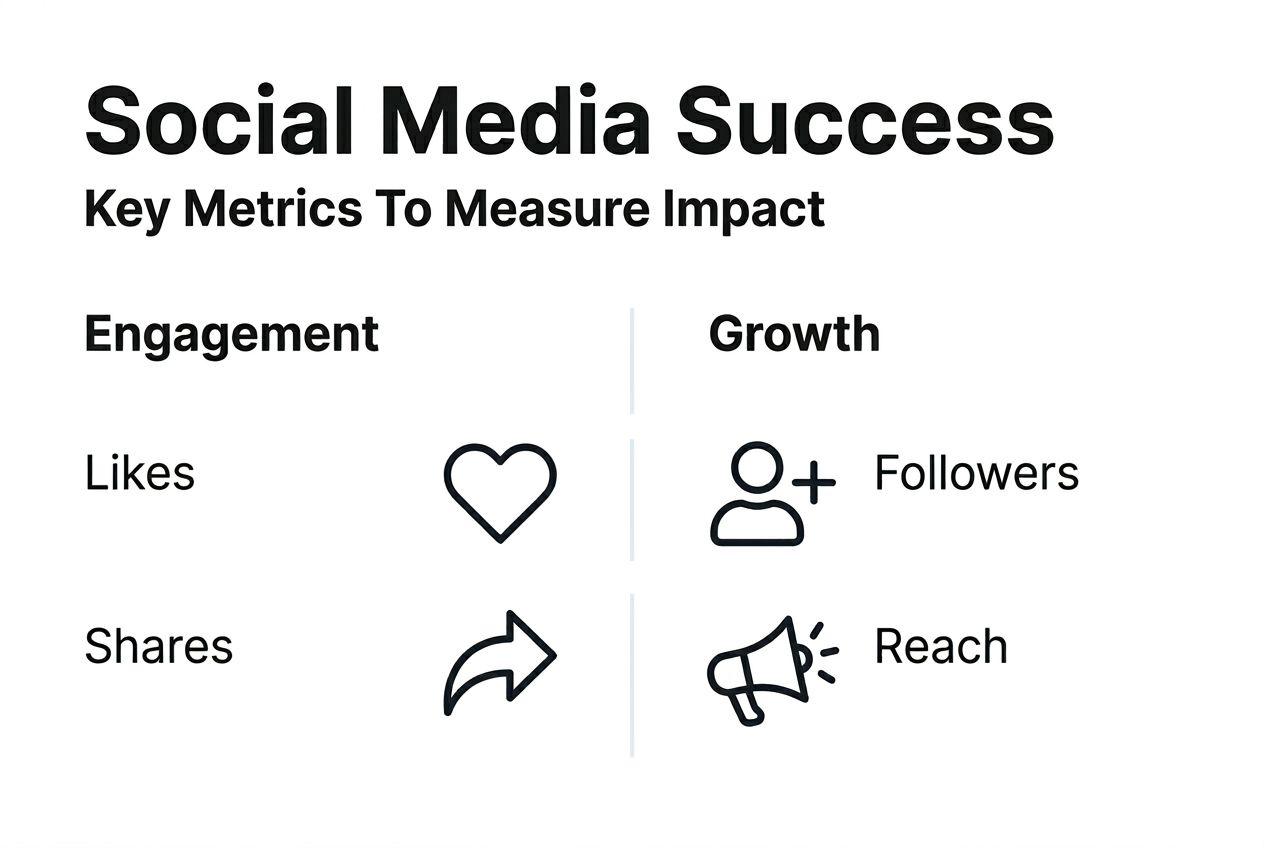
Measure growth in follower loyalty through community interactions, repeat engagement, and advocacy behaviours. Loyal followers don't just like posts, they comment thoughtfully, share content, and recommend your brand to others. These quality metrics matter more than vanity metrics like total follower count.
Use data-driven iteration to maximise ROI and campaign effectiveness. Regular analysis reveals patterns in top-performing content, optimal posting times, and audience preferences. Apply these insights to refine your approach continuously rather than treating strategy as static.
| Metric | Target Range | Measurement Frequency |
|---|---|---|
| Engagement Rate | 1-5% (varies by platform) | Weekly |
| Click-Through Rate | 0.5-2% | Weekly |
| Conversion Rate | 1-3% | Monthly |
| Community Growth | 5-10% monthly | Monthly |
| Response Time | Under 2 hours | Daily |
Realistic expectations prevent frustration whilst ambitious targets drive improvement. Balance patience with urgency by celebrating small wins whilst working towards larger objectives.
Enhance your social media presence with Toby Jones
Struggling to implement these strategies whilst running your business? Toby Jones specialises in integrated marketing services that transform social media from a time drain into a growth driver. Our team handles strategy development, content creation, and performance analytics so you can focus on what you do best.
We combine social media expertise with website design and development to ensure your online presence converts visitors into customers. Our digital marketing services create cohesive campaigns that amplify your message across multiple channels. Partner with us to build authentic engagement that drives measurable business results in 2026.
Frequently asked questions
How often should I post on social media for optimal engagement?
Consistent quality content outperforms frequent low-value posts. Aim for a regular posting schedule suited to your audience's habits rather than arbitrary daily quotas. Most businesses succeed with 3-5 weekly posts on each platform, adjusting based on performance data and capacity.
What are the best AI tools for managing social media content?
AI tools for caption generation, scheduling, and analytics increase efficiency significantly. Popular options include ChatGPT for writing assistance, Canva's AI features for design, and Hootsuite for scheduling. Always maintain human review to ensure authenticity and appropriateness before publishing.
How can I measure the success of my social media management efforts?
Monitor engagement rates, click-through rates, and conversion metrics as primary success indicators. Use platform analytics tools like Instagram Insights or Facebook Analytics alongside third-party solutions for comprehensive tracking. Review metrics monthly to inform strategy adjustments and demonstrate ROI to stakeholders.